


Nature needs YOUR land ethic!
Stay connected through our down-to-earth e-news.

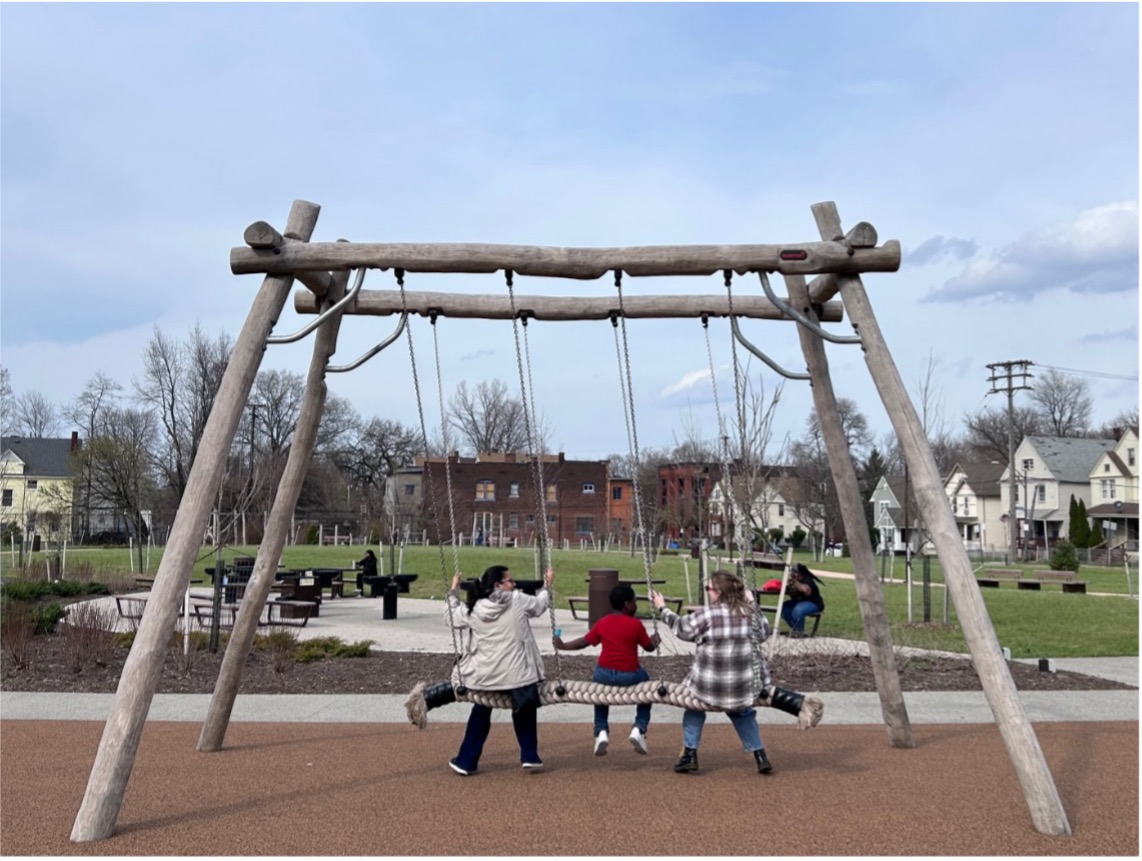

Cleveland, Ohio—For this story we travel to a legacy city and find the Land Ethic in action. Situated on the shores of Lake Erie in Northeastern Ohio, Cleveland (population 365,379) was once an industrial Midwest standout. Today the city is undergoing a renaissance in part due to a strong health care sector, a high concentration of corporations, and an embracing of inclusive urban life. Yet the recovery in Cleveland is uneven. Read on to discover how health care, residents, and a land conservancy are partnering to increase safety and improve health outcomes through ecological infrastructure in several neighborhoods located in high-poverty zip codes.
"The realization hit me in college when preparing for a presentation on green spaces and health,” says Dr.Kristen Berg, a social scientist with The MetroHealth System at Case Western Reserve University School of Medicine. “I had polled the class, and heard mostly a shared tapestry of childhood experiences like swinging on tires hung from trees, fort-building, and planting trees with grandparents. However one classmate spoke a truth that sticks with me today: their neighborhood simply wasn't safe enough to play outside. In that moment, I realized access to playing outdoors wasn’t equitably distributed. That reflection has traveled with me, turning childhood nostalgia into a mission to answer how and why our environment is a fundamental contributor to human health.”
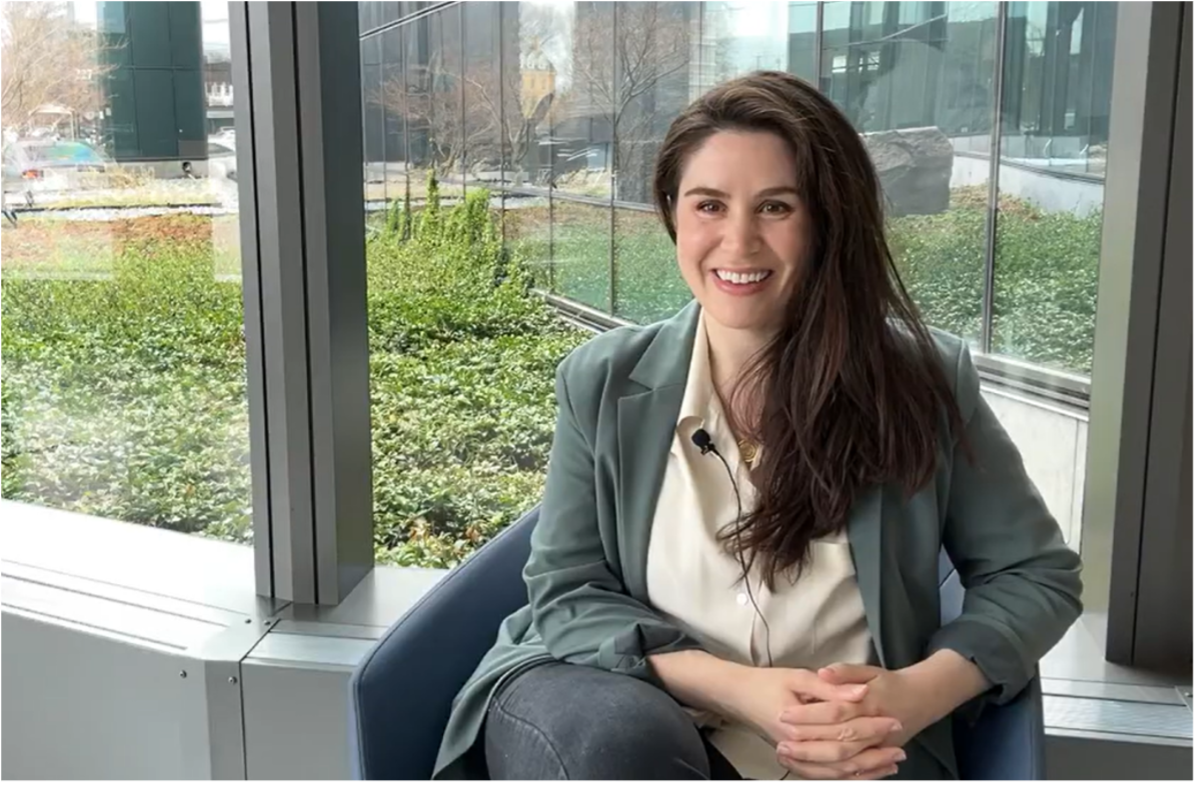
MetroHealth is Cuyahoga County’s safety net health system, meaning that it provides patient care regardless of individual ability to pay for services. The reoccuring health issues affecting patients throughout the system has illuminated all the factors that contribute to human health, including the human-made, social, and physical environments.
In Cleveland, multiple East Side neighborhoods have historically been affected by environmental and social disinvestment, resulting in poor health outcomes for thousands of residents. The once heavily polluted Cuyahoga River played a central role in the history of disinvestment and environmental injustices. The river divides the East and West sides of Cleveland, with the East Side industrial area harboring the infamous 1969 river fire that sparked the environmental movement in the U.S.
When the 2008 foreclosure crisis hit, and thousands of residents had to leave their homes, structures sat vacant and deteriorating. Fast forward to today: thousands of homes have been demolished across the city, and there are 30,000 vacant parcels, 20,000 of which are in public purview.
In response to such a large-scale challenge, leaders have come together to center the land as foundational to the creation of stronger communities, positioning the residents as the co-creators and eventual stewards of new green spaces.
“Whether it’s because they actually grew up in the neighborhood and have stayed, or they had to leave and have since returned, place attachment is powerful,” says Dr. Berg. “The residents are the natural experts and stewards.”
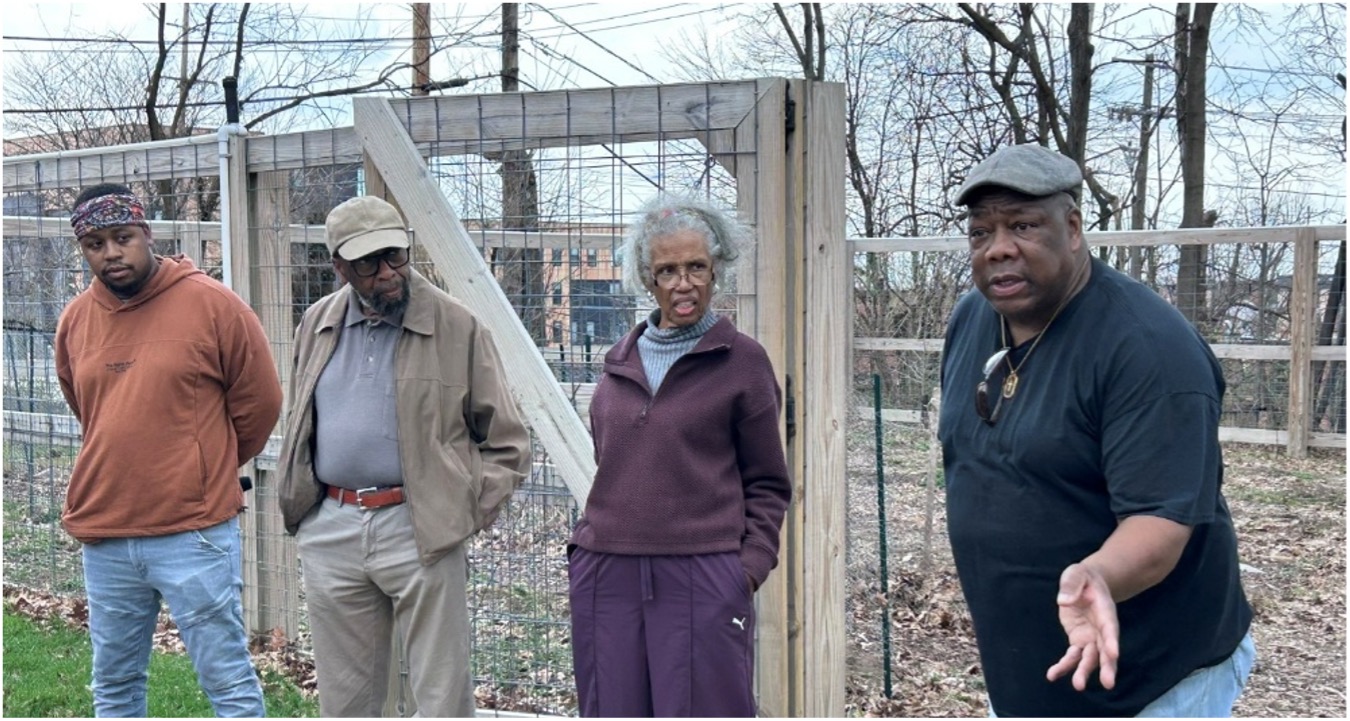
Resident Pastor Ernest Fields, who leads Calvary Hill Church of God in Christ in the Buckeye-Woodhill neighborhood, is widely recognized for his community activism and has spearheaded significant revitalization efforts. According to Pastor Fields, collective efforts across several blocks focus on both the physical environment and the professional growth of residents. By collaborating with local government and organizations like Greater Cleveland Habitat for Humanity and the Western Reserve Land Conservancy (WRLC) the neighborhood's physical landscape now features new green spaces and 40 newly constructed homes.
Beyond infrastructure, the project emphasizes community stewardship of public spaces. “We are committed to mowing the city-owned vacant lots on a more regular basis,” says Pastor Fields. “Our goal is to have all five streets manicured and looking good and we are encouraging the neighbors to get involved. We are working in community.” Fields and other local leaders are also concerned about improving the employment prospects for younger community members, and they are establishing a construction trades-focused program aimed at enabling the people living there to participate in home building efforts.
Serving in a lead convening role is the Western Reserve Land Conservancy (WRLC)—a unique land trust doing urban and rural restoration work in 30 northern and eastern Ohio counties. WRLC describes its Thriving Communities work as a partnership with residents and the city to implement cleaning and greening projects conceived of, prioritized by, and co-created by residents. In 2024, WRLC was awarded a $2.4 million federal grant from the U.S. Department of Health and Human Services to collaborate with healthcare systems MetroHealth and the Cleveland Clinic as well as Case Western Reserve University. The effort is melding healthcare data with conservation data and measuring both immediate and long-term health benefits in specific historically disinvested neighborhoods.
The collaborative leverages institutional expertise, including WRLC’s knowledge of urban reforestation, real estate land transactions, and environmental remediation, as well as research and health outcome evaluation at the neighborhood-wide level through MetroHealth, the Cleveland Clinic, and Case Western Reserve University. Among the expected benefits for the community and its residents are cleaner air and a reduction in chronic diseases. In addition, the grant enables the provision of stipends for individuals participating with WRLC’s urban reforestation efforts, as well as for serving on the resident advisory committee, thereby compensating them for their time and expertise.
Watch this two-minute video with Isaac Robb, Chief Urban Program Officer, Western Reserve Land Conservancy, talking about community conservation in Cleveland the role for land trusts like WRLC.
WRLC and its partners are working collectively on the complex problem of greening vacant land to improve health and environmental outcomes, and they are doing so with the foundation of a strong conservation philosophy.
“Wherever you are from, wherever you live, your relationship to that place and that land may be very different—how you use it, how you recreate with it, how you move through it. But we all have a relationship with the land,” says Isaac Robb, Chief Urban Program Officer with WRLC. “To us, community conservation means meeting people where they are and honoring those individual relationships with the land. It is about showing up authentically in whatever way that might present itself. Our staff does an excellent job with that.”
Building on the foundation the Cleveland collaborative has built, Dr. Berg’s work intersects with conservation leaders like Robb. Together, the institutions are evolving the traditional notion that healthcare is a place you “go to get” treatment. Instead, they champion a shared vision where health is the result of our daily interactions with our environment.
The residents at the center of this collaboration—such as those in the Buckeye-Woodhill neighborhood—are seeing the shift firsthand. They note that "cleaning and greening" makes the area feel safer and helps the community "tie together" with a sense of ownership. It is a shared belief among residents, the WRLC, and the researchers that if everyone works together, the neighborhood will revitalize. In the years to come, Dr. Berg’s evaluation team is now looking at quantitative data to back-up what these residents already feel: that the land itself is a powerful medicine.
The science is catching up to what communities like Cleveland already know.
In her 2017 book, The Nature Fix, science journalist Florence Williams points to city parks and green spaces as essential tools for managing the constant sensory overload of urban living.
Williams also shows that high-poverty areas of cities frequently suffer from a lack of tree cover and park space, which leads to measurable differences in community health and life expectancy. Therefore, urban design must focus on distributing green resources more fairly to improve public well-being across all neighborhoods.
To watch a replay of Florence Williams on Land Ethic Live!, click here.
• Watch this 3-minute video that spotlights the continuum of geography in which the Western Reserve Land Conservancy is working—from landscape-scale restoration efforts across NE Ohio to community-driven greening projects on formerly vacant lots in Cleveland. For its efforts, WRLC won the 2025 National Land Trust Excellence Award.
• Click here for a Land Ethic in Action story segment, “Our Brains on Nature,” with Florence Williams, author of The Nature Fix. Williams’ research includes population-level studies across the world that confirm the mental health benefits of spending time in nature.
• This story features key topics and concepts in conservation. To explore more, click on a link below for an explanation and additional examples.
This story includes commonly used jargon in conservation. To explore more, click on a concept below which will take you to the Jargon Buster Tool for an explanation and additional examples.
By sharing these stories, you help advance Aldo Leopold's Land Ethic, fostering awareness, inspiring stewardship, and strengthening the collective impact of conservation.


.svg)


The Aldo Leopold Foundation was founded in 1982 with a mission to foster the Land Ethic® through the legacy of Aldo Leopold, awakening an ecological conscience in people throughout the world.
"Land Ethic®" is a registered service mark of the Aldo Leopold Foundation, to protect against egregious and/or profane use.


Stay connected through our down-to-earth e-news.