


Nature needs YOUR land ethic!
Stay connected through our down-to-earth e-news.

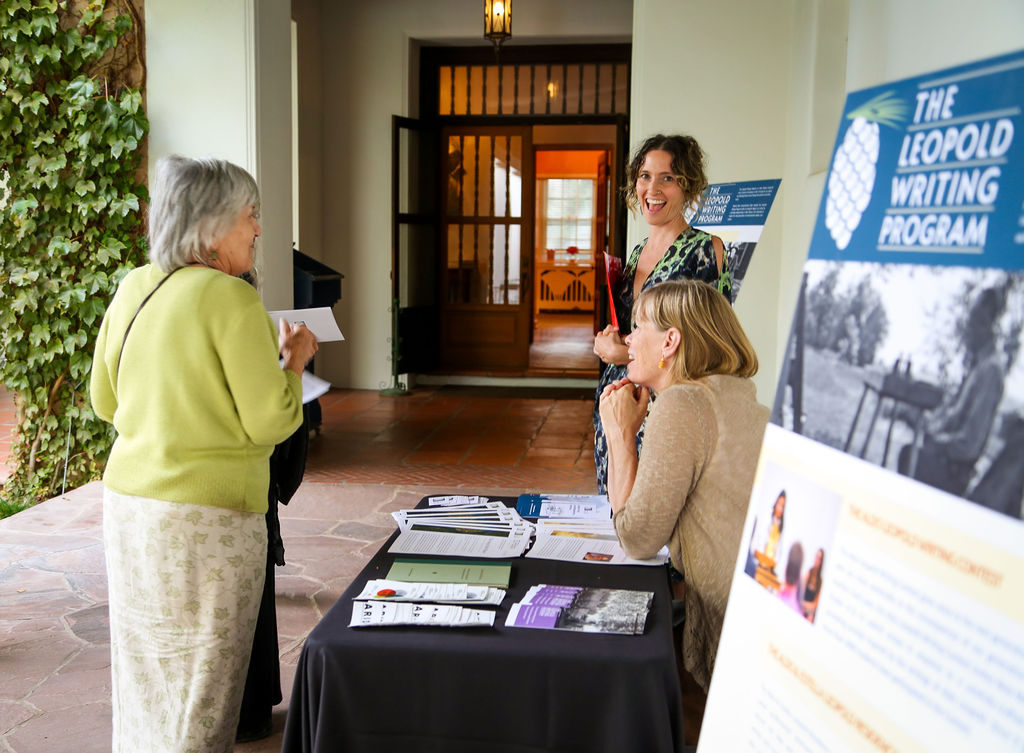
Header photo: Executive Director Nina Simon and Board President Sayre Gerhart greet attendees at the 2025 Annual Leopold Lecture. All photos by Christina M. Brogdon and used by permission of the Leopold Writing Program.
It's possible to understand the world from studying a leaf. You can comprehend the laws of aerodynamics, mathematics, poetry and biology through the complex beauty of such a perfect structure. It's also possible to travel the whole globe and learn nothing. —Joy Harjo
The last word in ignorance is the [person] who asks of an animal or plant, 'What good is it?' —Aldo Leopold
On a warm spring day in Albuquerque, family, friends, and local folks gathered for the Aldo Leopold Writing Contest awards ceremony at the Rio Grande Nature Center. Six hundred students in grades 6 through 12 from around the state of New Mexico had submitted essays responding to quotes by Joy Harjo and Aldo Leopold; twelve had been selected as winners or honorable mentions. Reading aloud from printed copies of their winning essays, the students put Harjo’s and Leopold’s words into context, sharing the many lessons they’d gleaned from paying closer attention to the land. The resilience and resourcefulness shown by a plant in drought mirrored the journey of grandparents who had made a life after immigrating to a new country. The “intensity and vitality of life” was thrown into sharp relief for one girl who heard the cries of a wounded baby deer on a camping trip. Water carved a path of grief, memory, and belonging for a young Indigenous writer who had grown up on the Navajo reservation but now lived in the city, and without her grandmother.
[Explore and read all the winning essays here.]
The Leopold Writing Program traces its roots back to the first iteration of the writing contest, which took place in 2009. Part of the Aldo Leopold Centennial Celebration in New Mexico, it was but one of an assortment of celebratory events honoring Leopold’s legacy in the southwest. Other activities included a community reading (“New Mexico Reads Leopold,” modeled off the original Wisconsin gatherings), tree-planting along the Rio Grande in the newly-dedicated Aldo Leopold Forest, an intergenerational “Thinking Like a Mountain” play, and a filmmaking competition.
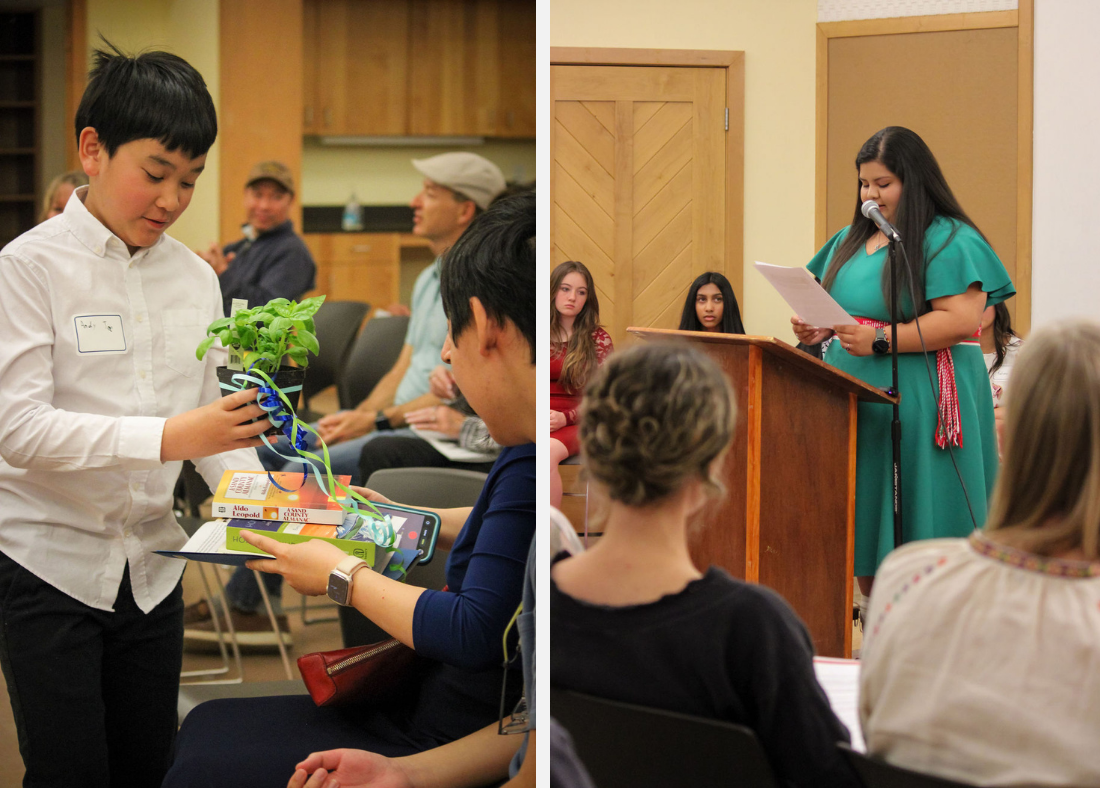
The writing contest aims to give voice to the younger generation as they’re emerging into a world of environmental crisis, empowering them to explore the ethical dimensions of our relationships to nature with Leopold as a jumping-off point. This is the second year the contest has been offered bilingually, and the second year judges have provided personalized feedback on each entry (no mean feat with 556 English and 45 Spanish essays submitted!). It’s moving to hear young people’s perspectives, how beautifully they write, the things that matter to them, the ways they already find solace, wisdom, and wonder in the land. The hope is that this single essay plants a seed of environmental consciousness that grows and evolves over the course of their lives.
This goal is reflected in the Leopold Writing Program’s broader mission: “to inspire an ethic of caring for our planet by cultivating diverse voices through the spoken and written word.” Two additional programs expand the scope of this work to all generations.
The Aldo & Estella Leopold Residency offers emerging and established writers the opportunity to reflect on the relevance of the land ethic in the modern world, surrounded by the landscapes where Leopold himself once lived and worked. The first writer-in-residence stayed at the historic “Mi Casita” in Tres Piedras, NM, in 2012, and more than two dozen writers have since completed the residency. In addition to a public presentation about their residency project and a contribution to the LWP’s quarterly newsletter, El Piñón, many residents remain engaged and involved, connected to the organization, each other, and the shared threads of their work.
The third program, the Annual Leopold Lecture, platforms distinguished environmental thinkers and inspires audiences to explore contemporary conservation issues. National Book Award Winner Barry Lopez served as the inaugural lecturer in 2017 (and presented awards for that year’s writing contest); Robin Wall Kimmerer spoke in 2023. Lecture topics have run the gamut from carnivore conservation biology to anthropology to traditional ecological knowledge to water ethics.
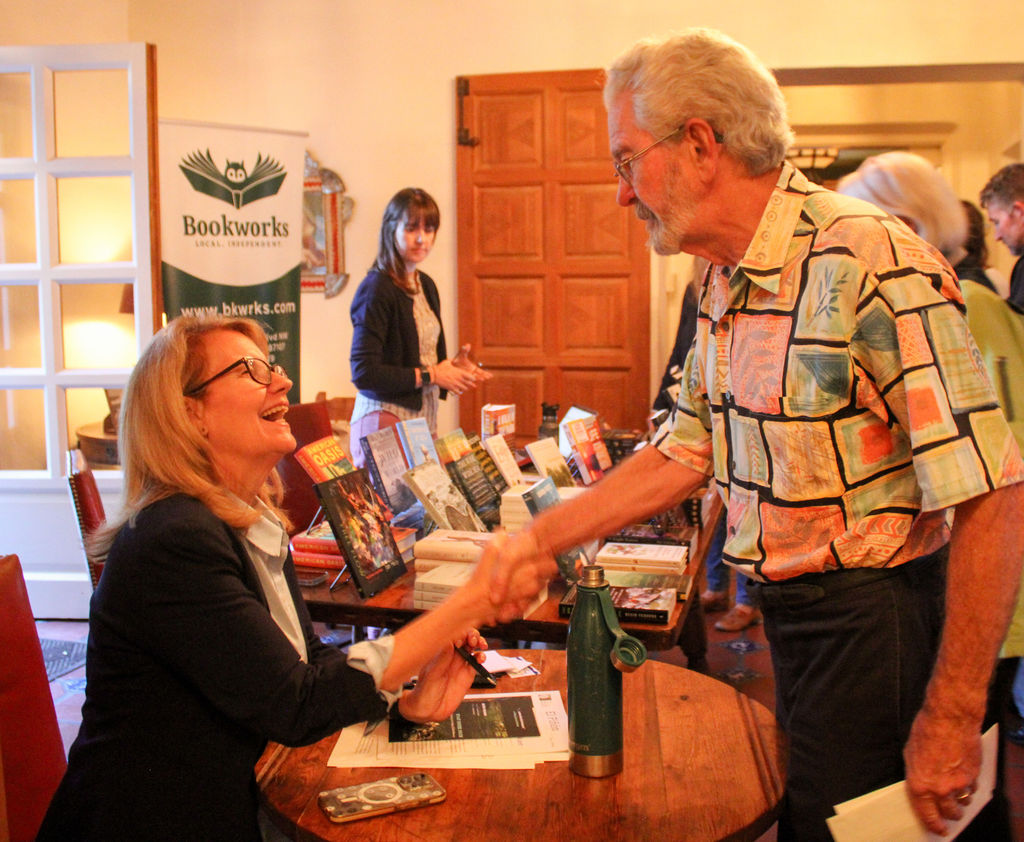
In the spirit of Leopold – whether through direct influence or convergently arriving at a shared philosophy – lecturers, residents, and young essayists all reveal the diverse crossroads and entry points to conservation. Their contributions to these programs not only reaffirm the enduring importance of Aldo’s written legacy, but honor writing itself as an essential tool and art form to elevate environmental concerns – to make the land resonate on the page, in the room, and in our shared imagination.
As much as the Aldo Leopold Foundation is grounded in Wisconsin’s ecology and history, emphasizing the Shack years and the writing of A Sand County Almanac, the Leopold Writing Program is rooted in New Mexico and Aldo’s early career – and continues to amplify Leopold’s southwestern legacy. With their recent acquisition of the family’s house at 14th Street in Albuquerque (designated a state cultural property in 1999 and a city landmark in 2025), the LWP hopes to establish a Library of Environmental Writing, a literary hub for the southwest and beyond that celebrates the tradition of place-based, land-focused writing across a variety of genres.
There are several ideas for how to use the house, with a couple programs already underway for the summer: writing workshops with environmental authors and a backyard Moth-style story series. The house could also serve as additional residency space for creative minds to reflect and study, penning thoughts in the same four walls where Leopold did; the garden out back might become a learning lab for schoolchildren to see climate resilience in action. So many potentials and possibilities sprouting from the Leopolds’ roots, anchored in the power of words and the magic of the land. That juxtaposition – bustling, vibrant congregation and quiet, reflective refuge – is a fitting homage to Aldo and the legacy born out of his time in New Mexico.

You can learn more and keep up with the Program’s activities at their website. Curious about Aldo’s Albuquerque period? Stay tuned for an upcoming companion blog post.
All photos by Christina M. Brogdon of Blue Lilli Photography, used by permission of the Leopold Writing Program.


.svg)


The Aldo Leopold Foundation was founded in 1982 with a mission to foster the Land Ethic® through the legacy of Aldo Leopold, awakening an ecological conscience in people throughout the world.
"Land Ethic®" is a registered service mark of the Aldo Leopold Foundation, to protect against egregious and/or profane use.


Stay connected through our down-to-earth e-news.