


Nature needs YOUR land ethic!
Stay connected through our down-to-earth e-news.

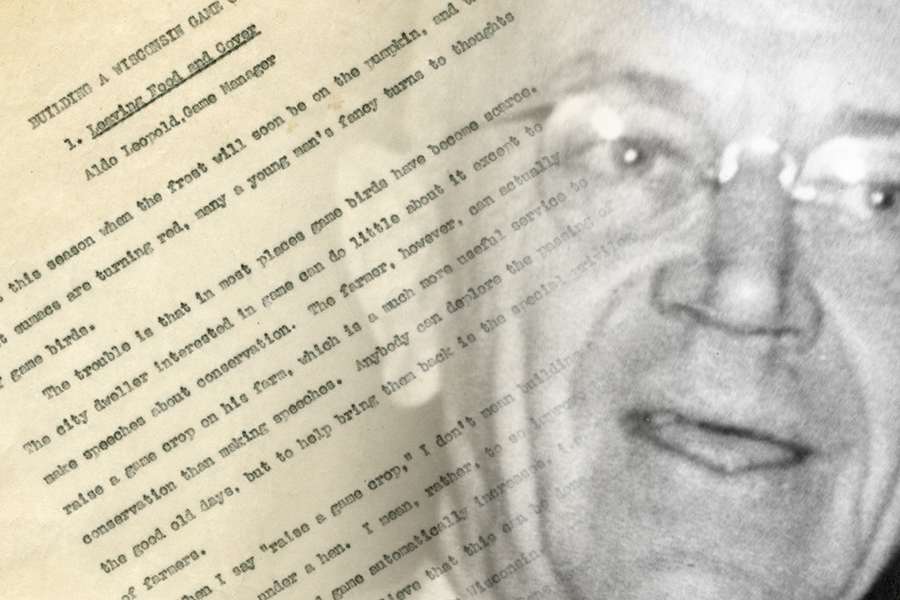
In early 2020, just as Covid-19 was slipping quietly under the door to my world, I learned that Aldo Leopold’s voice had likely been recorded but the primitive recordings were probably lost forever. This haunted me. The recordings were made of his 1933-1937 radio addresses to farmers in Wisconsin via the nation’s first public radio station, WHA, established by UW-Madison, where Leopold was designer and professor of the world’s first Wildlife Management course.
Ironically, many of the transcripts of Leopold’s talks were not lost and they are available to view online, at the UW-Madison archives. Hundreds of photographs of Leopold and the entire Leopold family are also there—thanks mostly to a fine German camera in the hands of shutterbug son, Carl Leopold. It’s part of the reason we have such clear, detailed views into the history of Aldo and the family.
But we could have heard his voice, too. I don’t mean “voice” in the sense of a writer’s “voice.” We have that by the ton with Aldo. I mean something else—something physical.
On that same WHA station not long ago, a call-in show posed the question to its audience, “If forced to make the choice, would you rather be without sight, or without hearing?” My answer was, to me, a no-brainer. Without hearing, of course, I need to see! But as I listened, caller after caller chose to retain hearing over sight. Intimate human connection, they said, would be lost without the ability to hear your loved one’s voice.
I chewed on that for a long time and eventually came to see. I think it’s why I’m haunted by the forever-loss of what might have brought me (and all of us) closer to Leopold.
I wondered “out loud” about these missing recordings through an email to senior fellow Dr. Stan Temple. I knew he had searched for them (check out Stan’s interview with University of the Air), and I wondered if the door of possibility was still open. He replied:
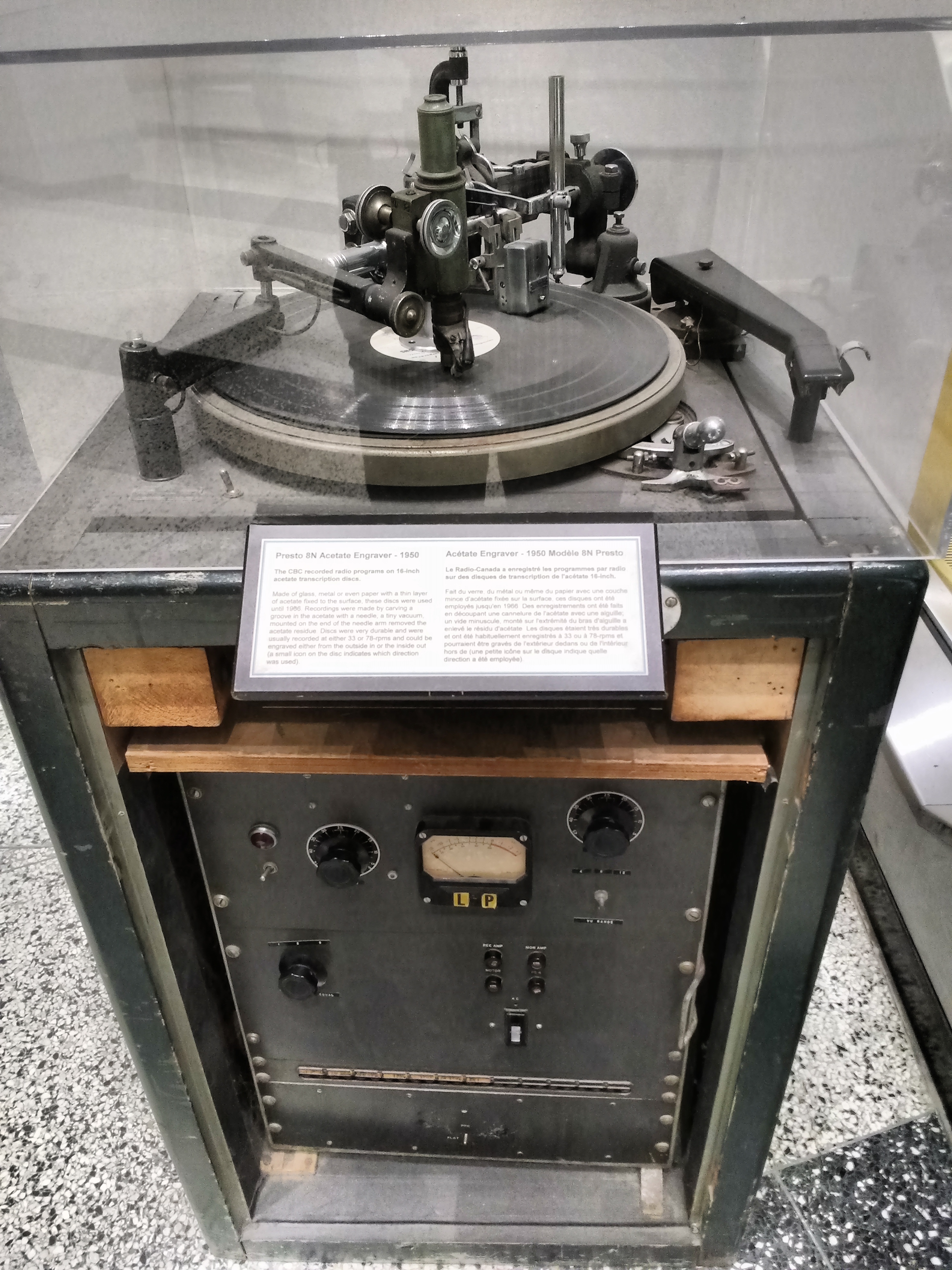
“If they [Leopold’s WHA talks] were actually recorded, the radio broadcasts from the years when Aldo Leopold was on the air were almost certainly recorded on transcription discs ("instantaneous disc recording"). His broadcasts were during the period (mid 1930s) when both aluminum and acetate discs were used by WHA (Wisconsin Public Radio, a pioneering effort by UW-Madison). Any recordings of his broadcasts that may have existed have probably been lost because they were either damaged and discarded or the aluminum was recycled during WWII. The UW-Madison Archives contain hundreds of discs of both types, many from the key period. Some are damaged beyond recovery; some are unlabeled and so fragile that it would be almost impossible to read them; some are intact and labeled but don't have Leopold's broadcasts. We did "play" a couple of the latter discs that had tantalizing labels (like "nature stories" or dates around the time of Leopold's broadcasts) through a high-tech and expensive laser turntable, but none featured Aldo.
Then, there are rumors that came from several credible sources who had firsthand knowledge (e.g.,Bob McCabe and Joe Hickey, Leopold’s graduate students). One of the most tantalizing was that a number of historical discs had been "stored" by volunteers during remodeling of Radio Hall, location of early WHA broadcasts. One version is that the specific discs with broadcasts of Leopold and others with conservation topics had been saved and stored by conservation historian, Walter Scott. They were reportedly, without any documentation, not recognized as having value and were discarded when his vast collection of historical artifacts and documents was broken up and dispersed to several libraries and archives after Scott's death. There were other less likely stories, but none bore fruit when I tried to track them down.
I also spent a lot of time trying to find a recording of the single broadcast Aldo Leopold made on the NBC Blue Network's Farm and Home Hour. Dozens of those discs featuring United States Department of Agriculture leaders are preserved in the USDA Archives in Beltsville, MD, but none featured Leopold. My search at NBC was not successful, and that company no longer maintains a complete collection of recordings from the period. I turned up nothing except the extremely remote chance that discs might have been saved by some Blue Network's local station, almost all of which no longer exist.
Over the years, I put out several requests for information (including via the Aldo Leopold Foundation and WHA networks, when I rebroadcast AL’s talks for the station’s centenary in 2017), but none bore fruit.”
So, there it is. Stan’s first word, “if,” stabbed at me. Even Dr. Temple, who had put in a valiant effort to track down physical remnants of Leopold, his recorded voice, was not certain the recordings were made in the first place. Recording technology was, after all, very expensive in the 1930s and the recordings that were made didn’t last long due to early, unstable materials.
But still. We can hope. I for one will keep my ears open.


.svg)

The Aldo Leopold Foundation was founded in 1982 with a mission to foster the Land Ethic® through the legacy of Aldo Leopold, awakening an ecological conscience in people throughout the world.
"Land Ethic®" is a registered service mark of the Aldo Leopold Foundation, to protect against egregious and/or profane use.


Stay connected through our down-to-earth e-news.