


Nature needs YOUR land ethic!
Stay connected through our down-to-earth e-news.

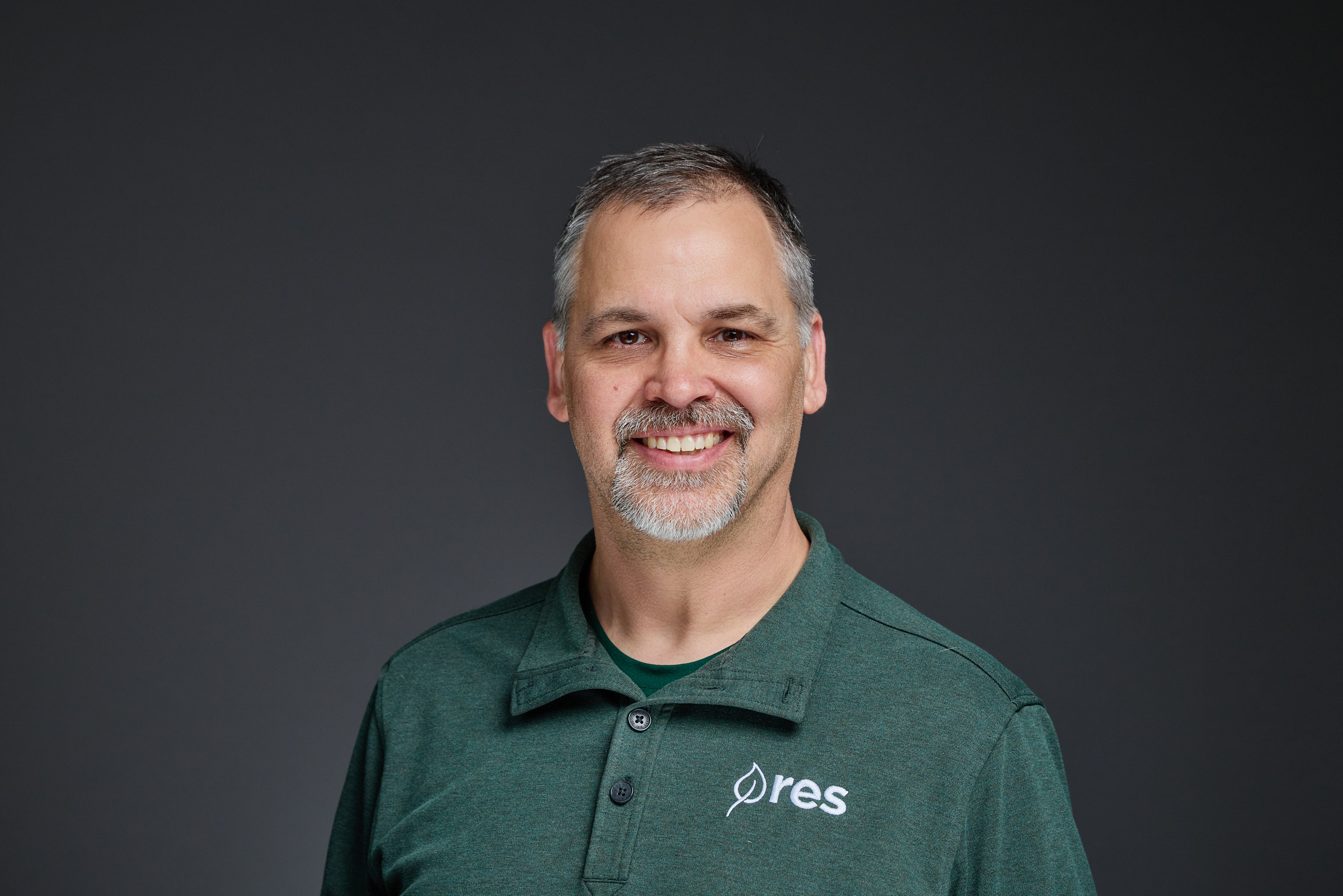
Today, I serve as Regional Operations Manager at Resource Environmental Solutions (RES). As the nation’s largest ecological restoration company, RES supports the public and private sector with solutions for environmental mitigation, stormwater and water quality, and climate and flooding resilience. RES operates under a unique model for delivering ecological uplift, grounded in science-led design, full delivery, long-term stewardship, and guaranteed performance. We design, build, and sustain sites that restore impaired ecosystems to health and, ultimately, self-sufficiency.
My role focuses on building and leading strong operations teams across the Midwest, including heavy equipment operators, restoration operators, supervisors, and technicians. Our footprint includes three offices in Wisconsin, two in Illinois, two in Indiana, one in Iowa, and one in Minnesota. We work on projects at scale—stream and wetland restoration, invasive brush removal, native seeding and planting, prescribed fire, dam removal, drain tile disablement and re-watering of the land, and long-term land management. From full-delivery mitigation projects to industrial-scale solar revegetation and large stream re-meandering efforts, my team has the equipment, knowledge, and capabilities to take on complex projects that help heal the land and bring nature back into our backyards, parks, and waterways.
My time at ALF played a formative role in shaping both the direction and depth of my career. ALF didn’t just expose me to conservation concepts—it grounded those ideas in lived experience. I completed my first burn seasons with Steve Swenson and/or Jeb Barzen serving as burn boss, alongside Steffan Freeman and Amy Martin as part of the crew. We were trained well—working with hand tools only, building strong lines while conserving water, and learning the discipline and patience that fire demands.
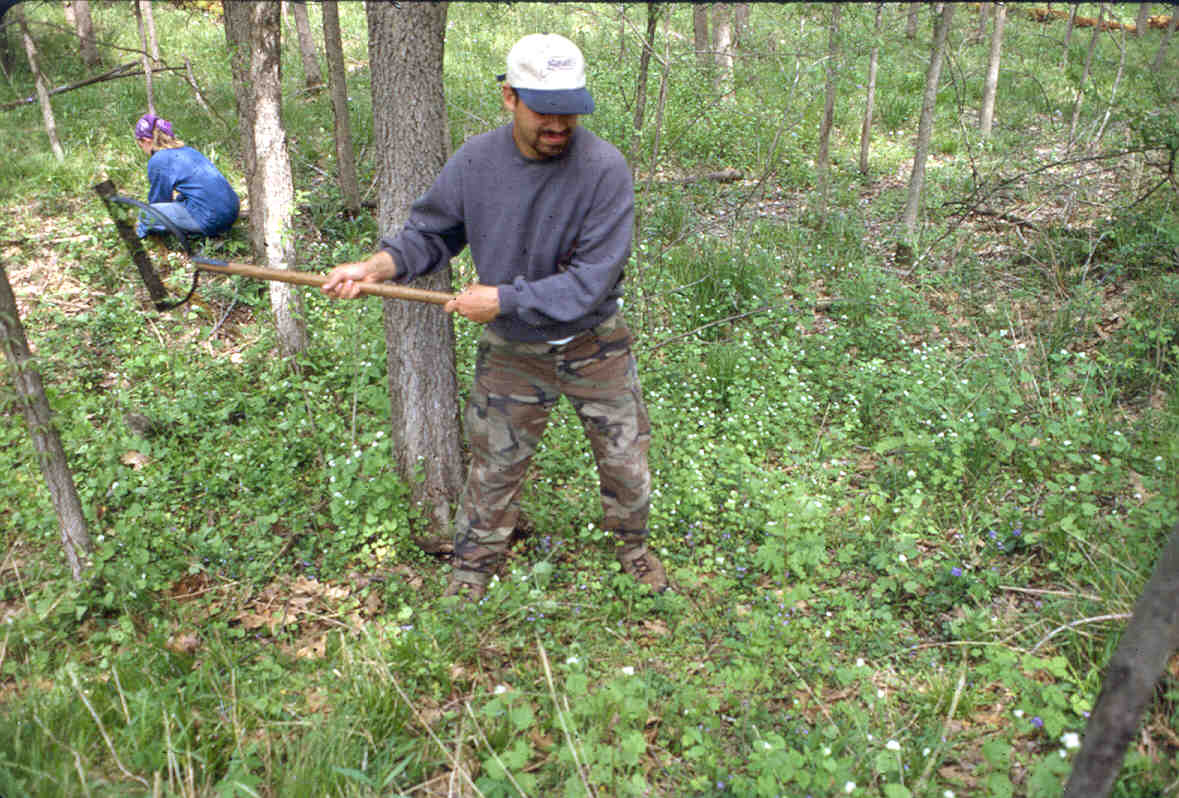
From there, we moved into invasive species control, spending long hours managing garlic mustard, followed by a summer of seed collection across remnant prairies and the Crane Foundation properties. With training in ethical collection practices, we learned dozens of native species—especially mesic prairie plants—and developed a deep respect for the genetics and integrity of remnant landscapes. That fall, we laid out “Amy’s Prairie” into her master’s thesis grids to test seeding rates for optimal diversity. With a team of volunteers, fellow ALF staff, and Nina as our guide, I helped seed my first prairie restoration.
I spent that winter clearing buckthorn. It was the first year, and Jeff Voltz and I, with limited equipment, made a dent in a dense thicket and opened the possibility for an open floodplain forest to thrive again. I returned for a second season, repeating the cycle and honing skills that would become the foundation of my career in ecological restoration.
I remember a casual conversation with Nina one afternoon as we categorized seed collections and discussed the day’s work. She remarked that one day ecological restoration would become a significant business opportunity, as the need to address the damage from our interference with nature would only grow. That conversation stayed with me. Today, I find myself working in that very space—where restoration is not only an ethic, but a growing and necessary field.
ALF gave me a deeper understanding that the land ethic is not simply an environmental philosophy—it is a moral orientation. It expands the boundaries of community to include soils, waters, plants, and animals, and challenges us to evaluate actions based on whether they preserve the integrity, stability, and beauty of the biotic community.
Personally, that shifted my view of conservation from passive protection to active stewardship. My land ethic became relational. It is rooted in humility, reciprocity, and responsibility. It asks not only, “What can we take?” but also, “What are we obligated to give back?” That perspective continues to guide how I make decisions—professionally and personally—and how I define success beyond short-term outcomes.
It’s difficult to choose just one memory. There were so many meaningful moments—from wandering remnant prairies in search of seed, to nights sleeping in the Shack, to lunch table conversations with Nina, whose kind and gentle presence burned bright with love for the land and for those around her.
There was something powerful about learning in a place where theory and landscape met so directly. We saw firsthand that with the right effort, natural processes and native species can bring rapid healing. That hands-on understanding continues to inspire me to stay close to operations—to keep my boots dirty and remain engaged in the field implementation of restoration projects.
It’s encouraging to see ALF continuing to foster dialogue around the land ethic in ways that are both grounded and evolving. In a time when environmental challenges can feel polarized or transactional, ALF’s commitment to ethics, community, and thoughtful stewardship feels especially important.
Remaining connected to ALF means remaining connected to a shared responsibility and language. The land ethic is not static; it is something we live into over time. Being part of that broader community reinforces that stewardship is collective work, and that we each carry forward a piece of that legacy in our own spheres of influence.
My time at the Aldo Leopold Foundation marked a turning point in how I understood my place in the world. Before ALF, conservation felt like an external cause—something to advocate for or study. At ALF, it became internal. The land ethic moved from text to terrain.
Learning in a landscape shaped by both ecological process and intentional restoration is transformative. The land itself becomes a teacher. Walking through prairie and woodland, you begin to understand that health is not perfection—it is resilience. You see disturbance followed by renewal. You learn that care is ongoing, not a one-time act.
ALF also taught me that ethics are lived in community. The land ethic is not just about our relationship with soil and water; it is about how we relate to one another while stewarding them. Shared labor, thoughtful dialogue, and collective reflection were as formative as any reading. Conservation is cultural work as much as ecological work.
In my professional life today, I often return to a simple question: Does this action contribute to the integrity and stability of the broader community—human and non-human alike? The land ethic remains both compass and measure.
Looking back, ALF was not just a chapter in my early career—it was a lens. It sharpened my awareness of interdependence and responsibility. It showed me that meaningful work is often quiet, cumulative, and rooted in place. And it connected me to a community that continues to wrestle with what it means to live ethically within the natural world.
For that, I remain deeply grateful.
Check out the extraordinary 2001 Leopold Foundation Fellows: Amy Martin, Steffan Freeman, Jeffrey Voltz


.svg)

The Aldo Leopold Foundation was founded in 1982 with a mission to foster the Land Ethic® through the legacy of Aldo Leopold, awakening an ecological conscience in people throughout the world.
"Land Ethic®" is a registered service mark of the Aldo Leopold Foundation, to protect against egregious and/or profane use.


Stay connected through our down-to-earth e-news.