


Nature needs YOUR land ethic!
Stay connected through our down-to-earth e-news.


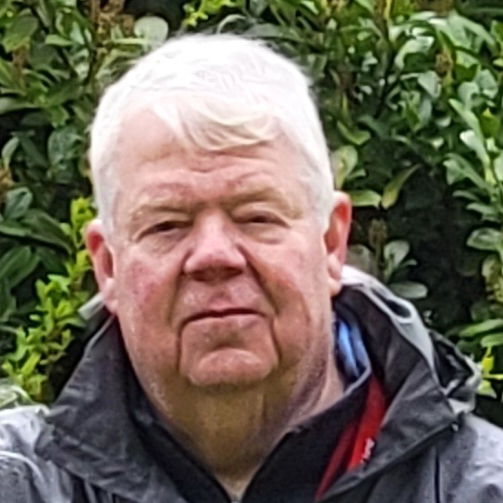
I read Leopold’s A Sand County Almanac (ASCA) for the first time in 1967 during my freshman year at Iowa State University. The book was recommended reading as part of a class on Ecology I was taking. I recall enjoying the book, especially the first two sections—my appreciation for the third section took time and additional readings to firmly take-root—and that copy of A Sand County Almanac is still in my library (having escaped being sold back to the campus book store to generate money for pizza!).
After graduating from Iowa State University, I attended law school at the University of Iowa, graduating in 1974. I entered the U. S. Air Force shortly thereafter, beginning what became a 23-year career as an active duty judge advocate, followed by 22 years as a civilian attorney in the Department of Defense (DoD) Office of General Counsel. Along the way, in 1984 I earned an advanced law degree (LL.M.) from the University of Washington concentrated on environmental law, which became my singular focus thereafter.
In 1998, I and Bruce Beard—a DoD client, friend, and fellow Almanac enthusiast—were in the Twin Cities to consult with Indigenous tribes on behalf of DoD. While there, we took advantage of the opportunity to visit Pheasants Forever’s offices and talk with them about the Leopold Education Project (LEP), an environmental education program based on A Sand County Almanac then overseen by Pheasants Forever. This led to Bruce and I attending an LEP workshop later in 1998 hosted by the Aldo Leopold Foundation. We began our workshop experience with a canoe trip down the Wisconsin River ending at the iconic Leopold Shack, where we participated in a group Dutch oven cookout. We met Buddy Huffaker for the first time during this visit to the shack and through him received an invitation to meet Nina Leopold Bradley at her home. Bruce and I had been talking about DoD trying to put together a conference in 1999, coinciding with the 50th anniversary of the publication of ASCA, that would address the Land ethic for public land managers (enlarging on Leopold’s thinking, which was focused on private landowners), but knew we’d need some help to make the conference a reality. We introduced the idea to Mrs. Bradley, who liked it, and with her support, and with assistance from ALF, Pheasants Forever, and the US Fish & Wildlife Service, we held a two-day conference in April 1999 at the then-new U.S. Fish and Wildlife Service National Conservation Training Center in Shepherdstown, W.V. The conference, titled “Aldo Leopold’s Land Ethic: A Legacy for Public Land Management,” attracted a host of Leopold scholars, and resulted in published proceedings that have since been widely distributed. Being part of the planning for, and execution of, this conference was a highlight of my career in conservation work and led to a life-long friendship with Buddy.
After I received my Master of Laws degree in 1984, my professional responsibilities became almost exclusively environmental law, with an even narrower focus on natural and cultural resources and Indian law. In providing counsel to my clients in the Office of the Secretary of Defense and the Military Departments, Aldo Leopold’s land ethic was always in my mind and significantly colored the advice I provided. In my 45 years of service, I always felt that the military mission and land conservation could both be achieved without compromising either imperative. I am proud to have provided legal support for both the Readiness and Environmental Protection Integration Program and the Sentinel Landscape Program, two DoD-led cost-share programs that—in conjunction with many partners—protect, enhance, and restore lands in the vicinity of military installations, not to obtain additional training lands but to avoid land-use conflicts, preserve high-value habitat, and increase installation and surrounding community resilience. Together, these programs have, through the imposition of conservation easements and other legal means, protected more than 1.3 million acres of land and enrolled many thousands more in other federal and state financial and technical assistance conservation programs. In my view, this represents the Land ethic in practice and helps landowners to better appreciate their own stewardship responsibilities.
For many years, I was asked to provide an ethics lecture as part of the annual Environmental Law Course at the Judge Advocate General’s School located at Maxwell Air Force Base. Some years, I spoke about the legal ethics rules that govern our profession. But every other year, I focused my lecture on environmental ethics. These presentations were all constructed around Aldo Leopold’s Land ethic and featured some of Leopold’s wonderfully pithy quotes that say so much in so few words. Not surprisingly, and due very little to my skill as an orator, my environmental ethics presentations were always well received (and I’m sure resulted in some new readers of ASCA).
I believe the Aldo Leopold Foundation is engaged in vitally important missionary work. Everyone that is exposed to ASCA, the remarkable life and legacy of Aldo Leopold himself, and the land ethic is at least equipped to recognize the importance of making thoughtful land use decisions. Moreover, the Leopold “champions” the Foundation is producing are, as a result, equipped to influence countless others who might otherwise never encounter the principles on which the land ethic rests.
I believe strongly that the best hope for our planet is for young people to be introduced to the natural environment and all its wonders. I’m not sure my first reading of ASCA would have meant nearly as much to me had my parents not instilled in me a sense of wonder derived from a childhood spent mostly out-of-doors. I suspect that most of the young people the Foundation reaches are self-selected because they already have an affection for things natural. Supporting these young people and equipping them with the tools to gently bring others into the fold, as does the Aldo Leopold Foundation, is in my view a mission deserving my support.
My wife and I had, for several years, been making donations to this foundation and other charities using after-tax dollars. When I turned 73, I was required to begin withdrawing “required minimum distributions” (RMDs) from my IRA. Usually, these RMDs are considered taxable income, but I discovered that if I direct my IRA administrator to transfer my RMDs straight to charities—without passing through my hands—these withdrawals are not considered taxable income to me. In effect, this means that I am able to make more generous donations to the charities of my choice, including the Leopold Foundation, because I don’t have to consider first paying taxes on these IRA withdrawals.
There are only a few ways for those who do not itemize deductions on their tax return to receive a tax break for making charitable donations, but this giving strategy is one of those. Moreover, it is quite flexible—if you wish, you can decide to donate just a portion of your RMDs to charities and have the remaining funds distributed to you (although these funds will be taxable to you). Just remember, if you wish these RMD withdrawals to be tax-free to you they must be transferred straight from the IRA to the charities you’ve selected.
Learn more about different ways to give here.
Explore the stories of Leopold Foundation donors, Gary Meffe, and Peter Dunwidie.


.svg)

The Aldo Leopold Foundation was founded in 1982 with a mission to foster the Land Ethic® through the legacy of Aldo Leopold, awakening an ecological conscience in people throughout the world.
"Land Ethic®" is a registered service mark of the Aldo Leopold Foundation, to protect against egregious and/or profane use.


Stay connected through our down-to-earth e-news.